Matchmaking or Monetising?
Singapore’s rendition of Pop the Balloon or Find Love reveals just how blurred the line between performance and personality has become.
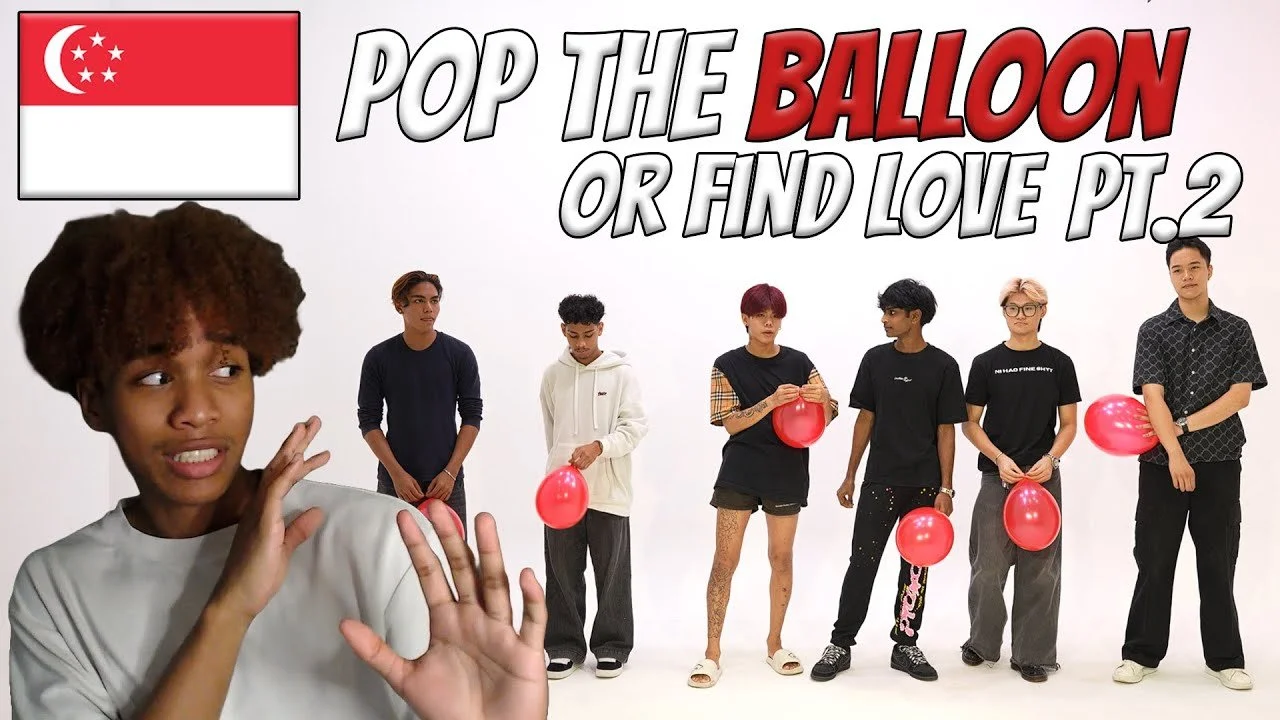
Photo Credit: YouTube/Sol Efe
In an age where everything is turned into content, romance has always been the easiest to sell. Dating shows and reality TV have translated into short-form videos on social media, giving rise to well-known content formats like Hit the Buzzer or, more famously, Pop the Balloon or Find Love.
Hosted by 18-year-old Sol Efe, Pop the Balloon SG made waves in Singapore’s TikTok scene in July with its first episode — and still running. What started as a lighthearted “speed dating” video soon spiralled into heated debates over not just the issue of performance for content, but also objectification and a broader issue of dehumanising people we see on screen. I admit, it does sound like a stretch. Isn’t it just a stupid, but overall harmless video? That’s what I thought, until I saw the drama unfold for myself.
The Drama
Featuring Singaporean youths aged 17–20, Pop the Balloon SG had contestants pop their balloons if they thought someone wasn’t a good match for them. With such a superficial method of speed dating, it’s no wonder the contestants were depicted in a bad light.
The youths were brutal, to put it nicely. It’s one thing to shut someone down when they ask for your Instagram. It’s another when they have to watch you burst your balloon the moment they step into the room — followed by five others doing the same because you’re that chopped. 🥀🥀
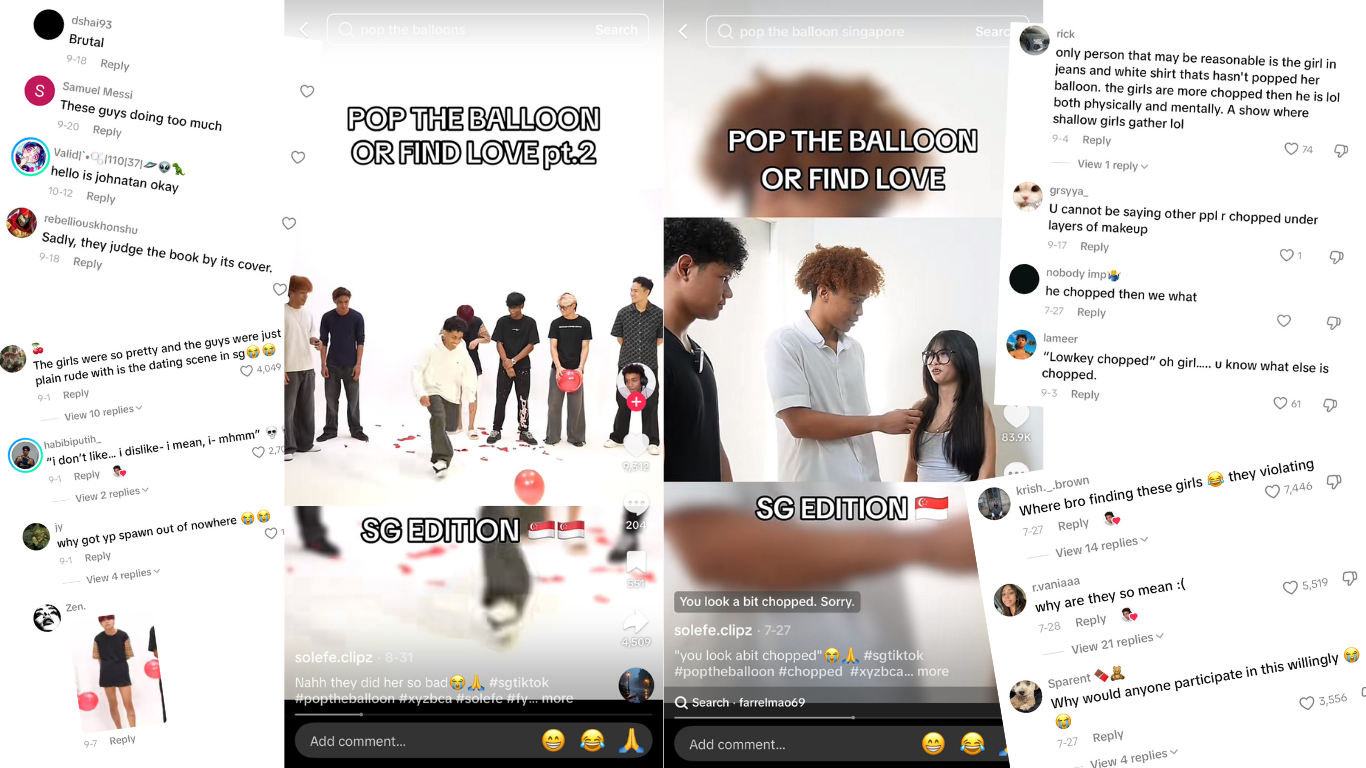
Photo Credit: TikTok/@solefe.clipz
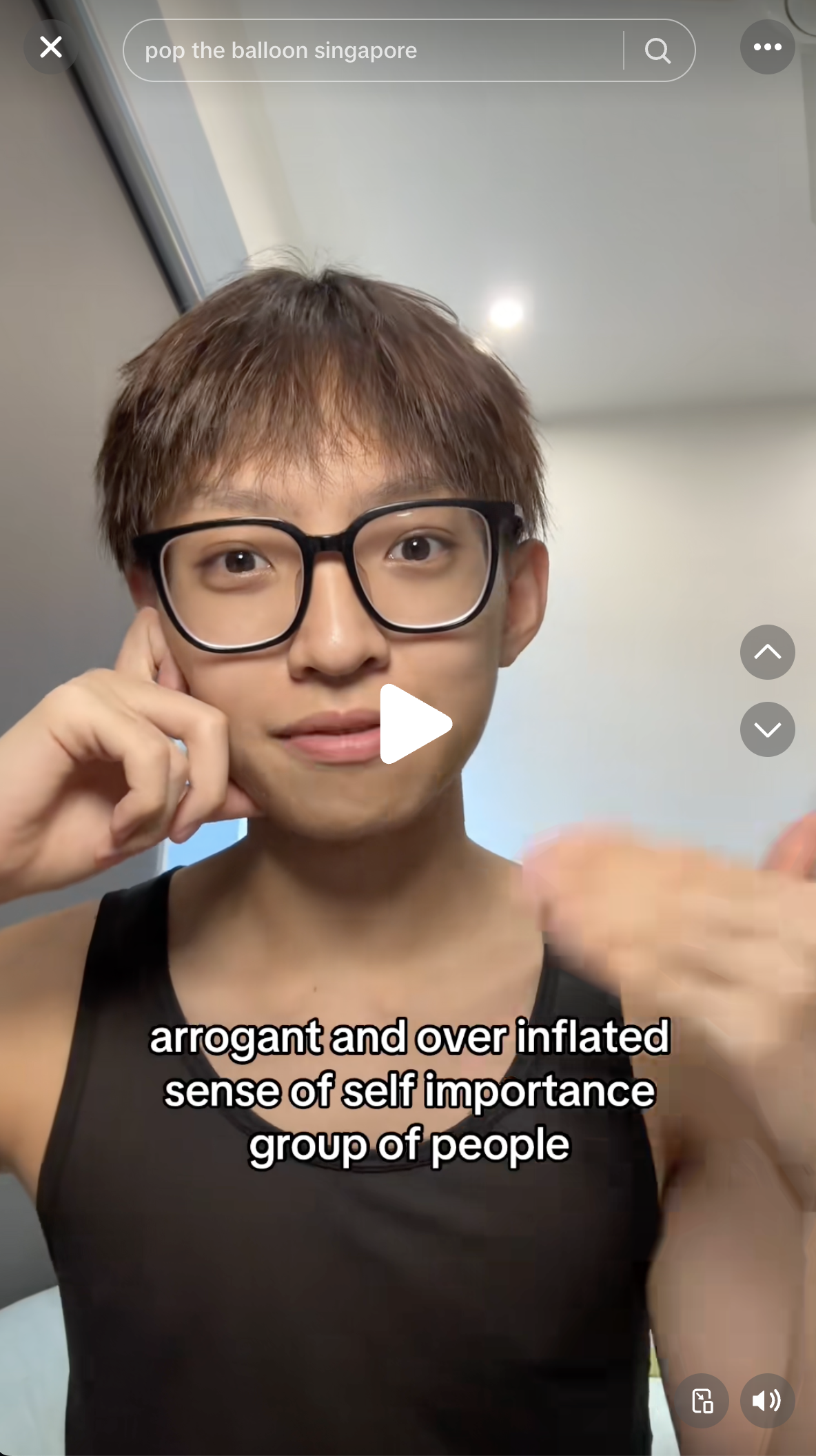
If you thought the series was a hard watch, netizens would agree with you… albeit with unfiltered enthusiasm. Netizens ripped into both the guys and girls; not a single one escaped without someone clowning their looks or personality. Contestants like Johnathan, the designated “YP”, were reduced to memes, punchlines or insults. #sgtok was turned upside-down with the overwhelmingly negative response to Pop the Balloon SG. Even influencers, like Dewy Choo, shared their thoughts on the series, and none of them had anything positive to say about it.
So, what makes Pop the Balloon SG so cringe?
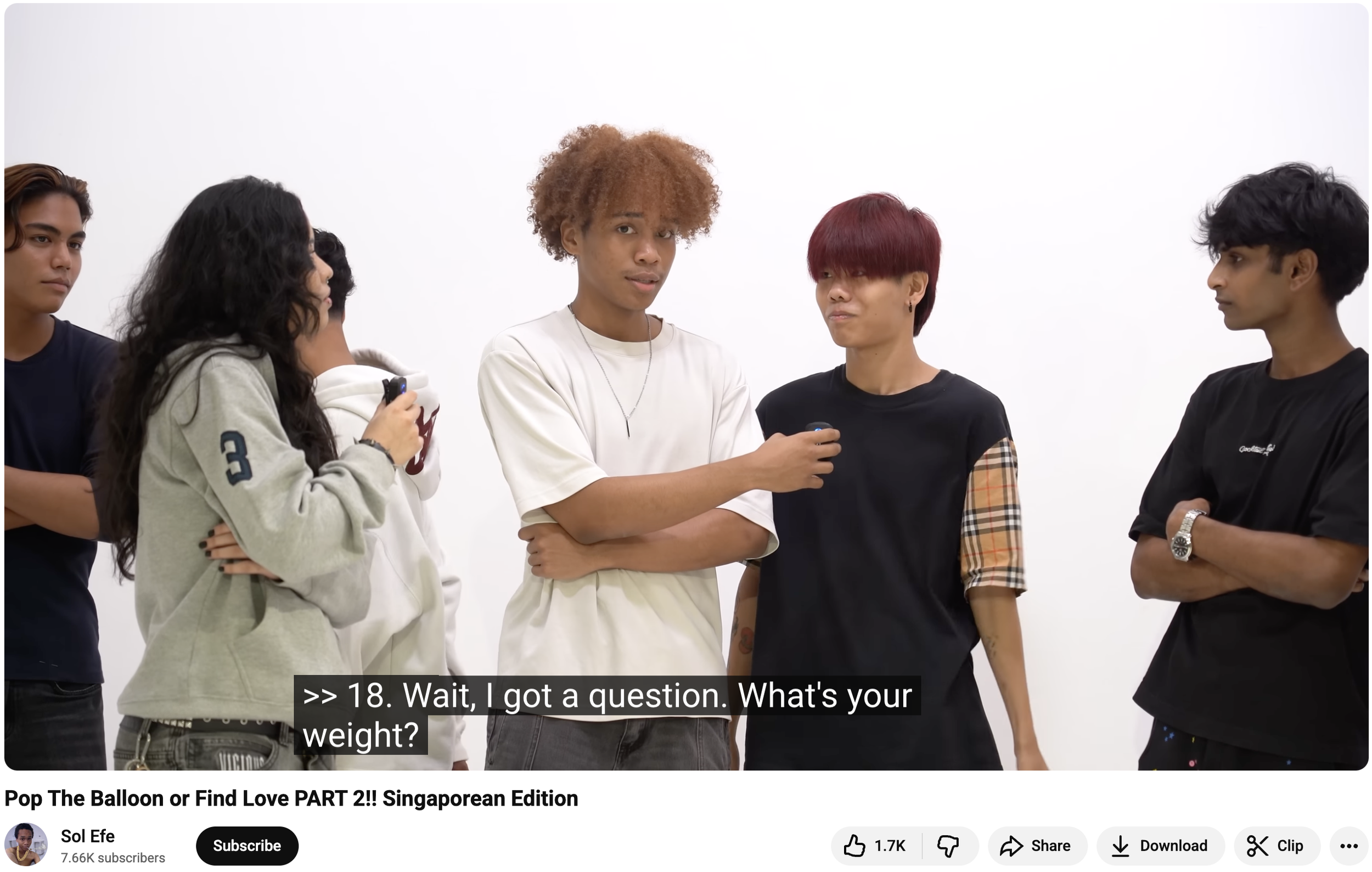
Photo Credit: YouTube/Sol Efe
“What’s your weight?”
This is just one of the many horrible lines from the contestants. Along with other superficial reasons or copout answers, many of them cited appearance (read: “you’re chopped”) as the reason for popping their balloon, which is just plain sad. Why would you call someone ugly straight to their face? It could be a matter of playing up a persona for the camera or an inherently rude personality, but the two episodes truly reflected the contestants’ lack of respect and kindness.
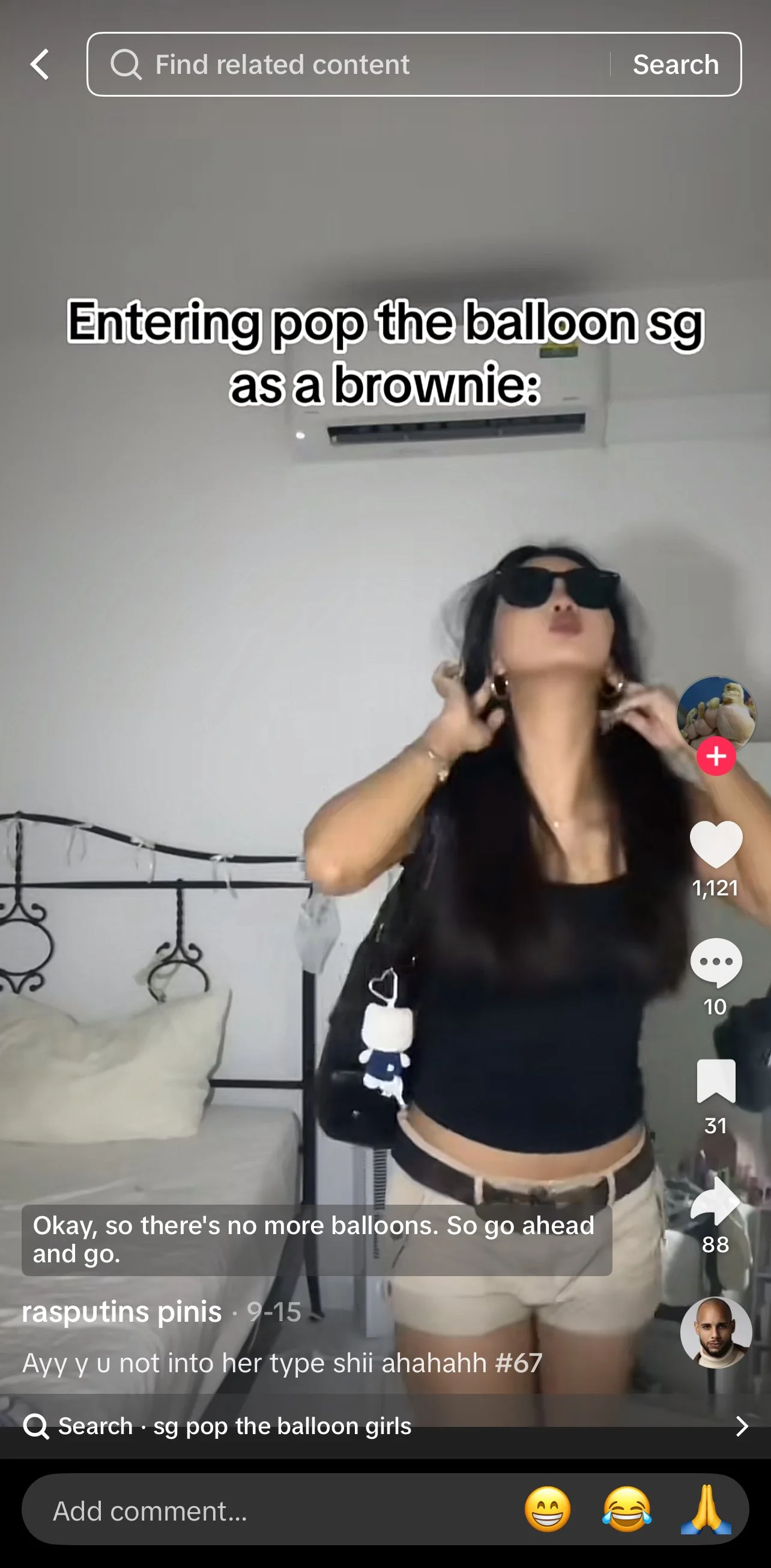
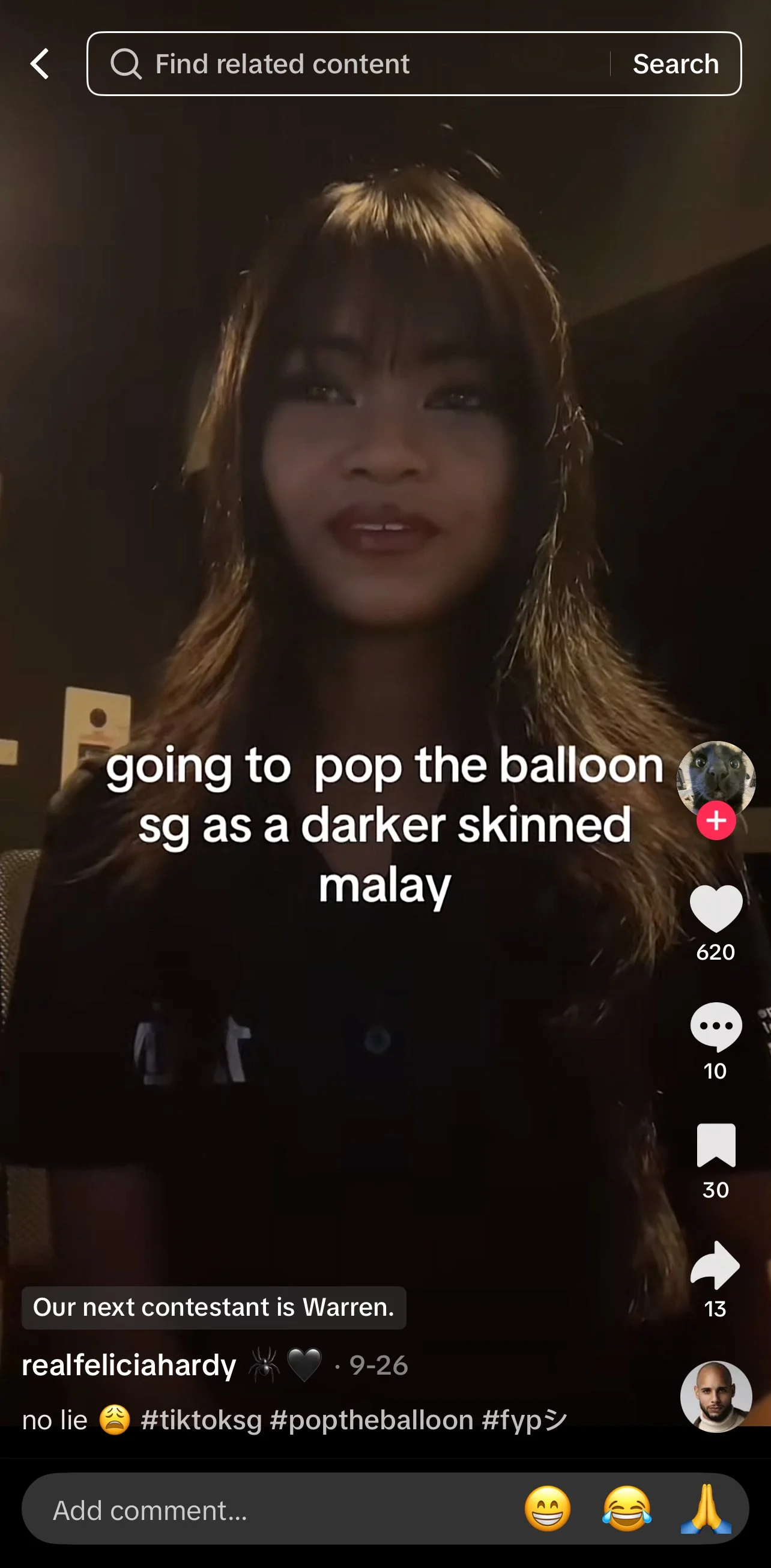
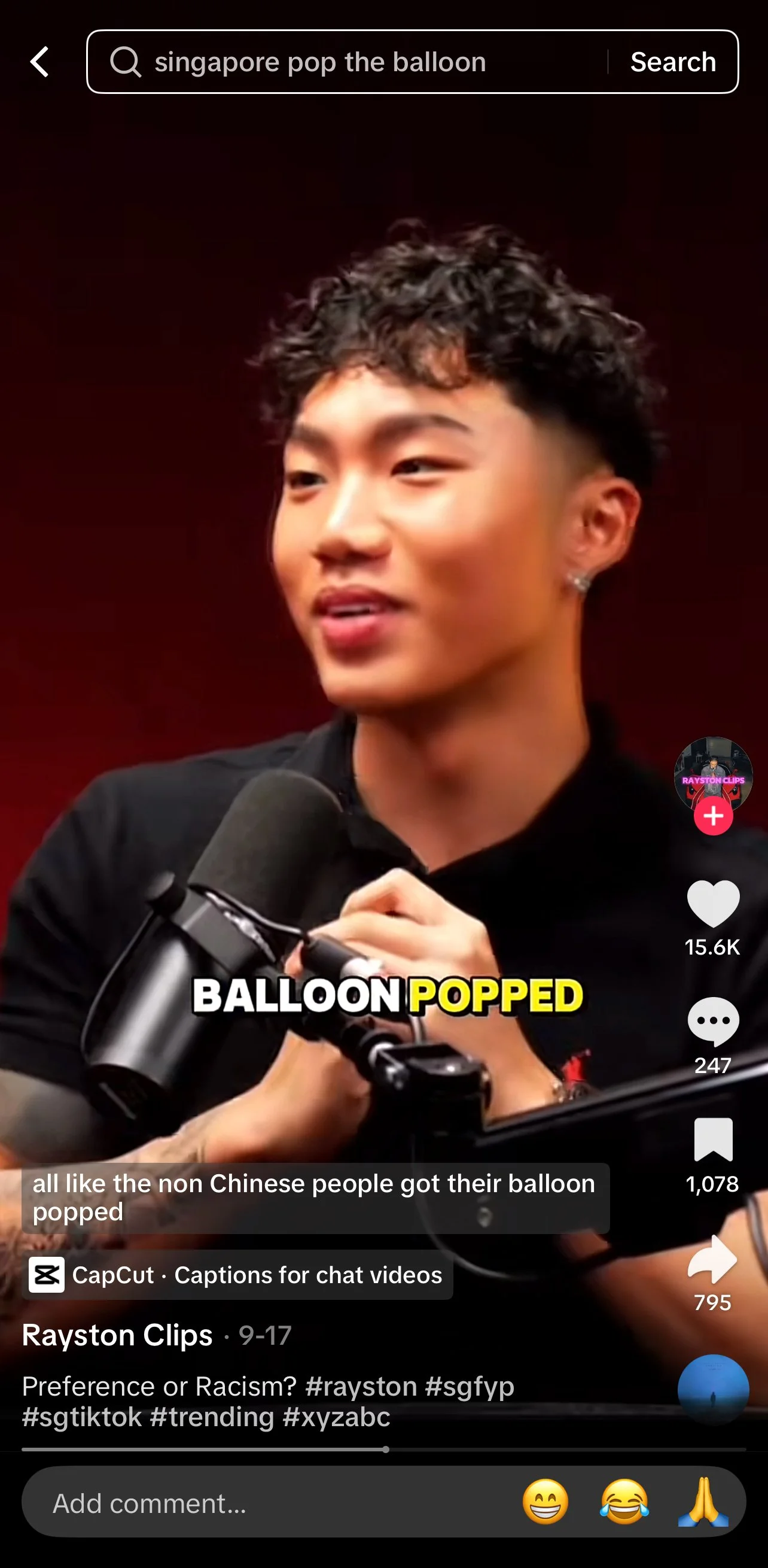
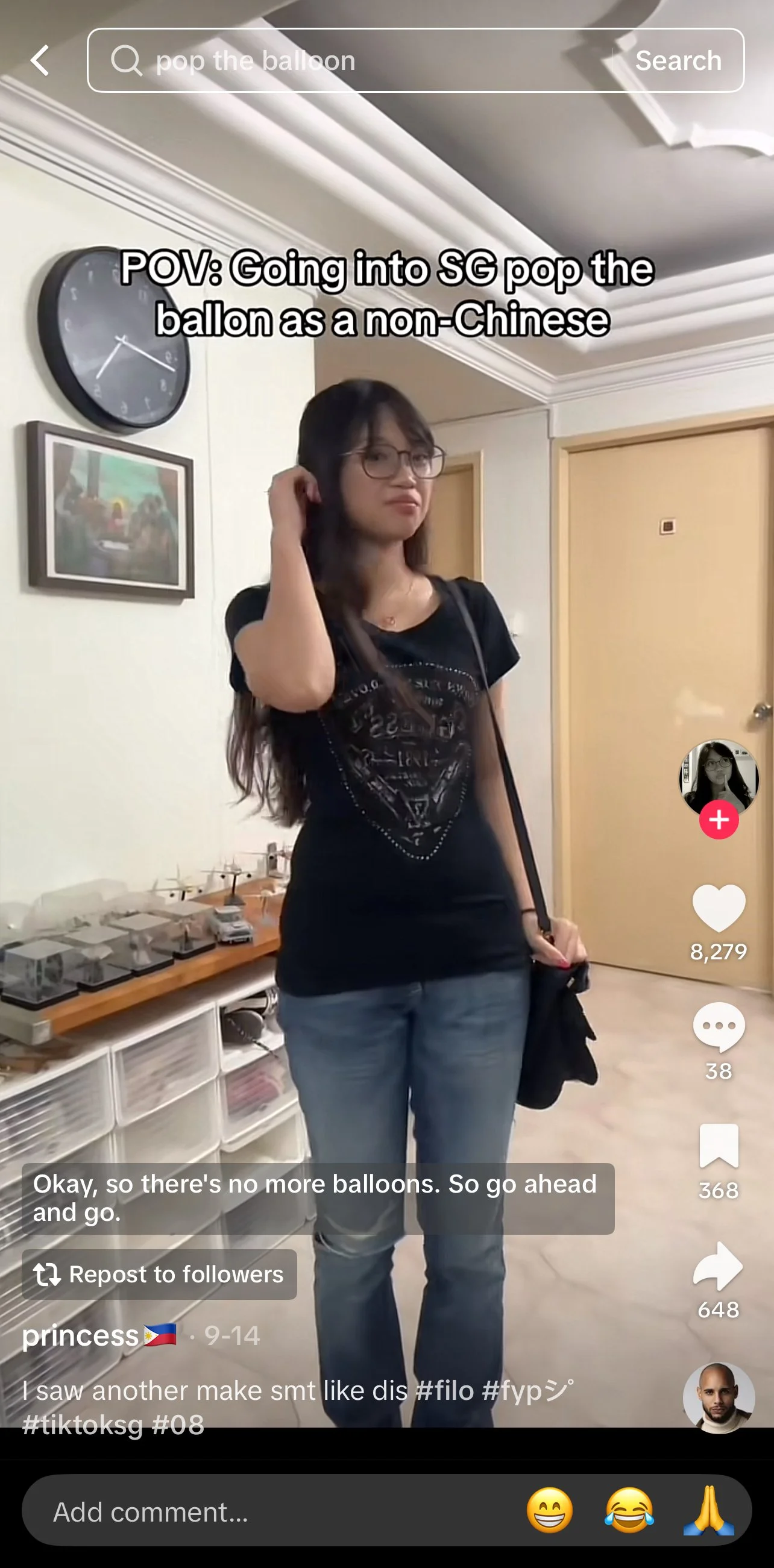
Photo Credit: TikTok/@fermentednips, @qiqimhn, @raystonpov, @princess_atelyssa
Netizens have even made parodies of the series, making fun of how it was mostly the non-Chinese contestants who had their balloons popped. It got influencers talking about the internalised racism still present in multicultural Singapore and how Gen Zs seem to be growing more “toxic”.
The cost of going viral
While leaving critical comments and judging the contestants’ actions can be irresistible, we seem to forget that these are real people behind the screen — students with insecurities, and lives beyond that one viral moment. These contestants are only teenagers, and yet they’ve been ripped apart by the internet for the stupid, spur-of-the-moment things they said on camera. Maybe it’s idealistic to think so, but they might have walked in hoping for love or a fun time, only to leave with humiliation and public scrutiny.
Once there’s a reason to hate on a contestant, commenters leave barrages of insults that poke at their looks, their voice, their clothes… living people are reduced to caricatures — villains to be “brought down”. As much as Pop the Balloon SG made me cringe, it was the comments that really made me pull back. It was a jarring wake-up call that this is the reality of pursuing content, of risking identity and the self for views. That the internet is a gaping maw that consumes and strips people of context, one that reduces them to nothing but archetypes.
“They brought this upon themselves.”
We’re quick to judge when people make it easy, be it through a snarky comment or a rude gesture. I admit that I’m no different. The contestants definitely weren’t the nicest bunch in Singapore. But I think it reflects more on us as a society when we turn ordinary people like these teenagers into memes or jokes. We consume them in fragments — a screenshot, a sound bite — robbed of context. We laugh and point fingers because it’s easier than swiping past and going on with our lives, simply because we chase entertainment.
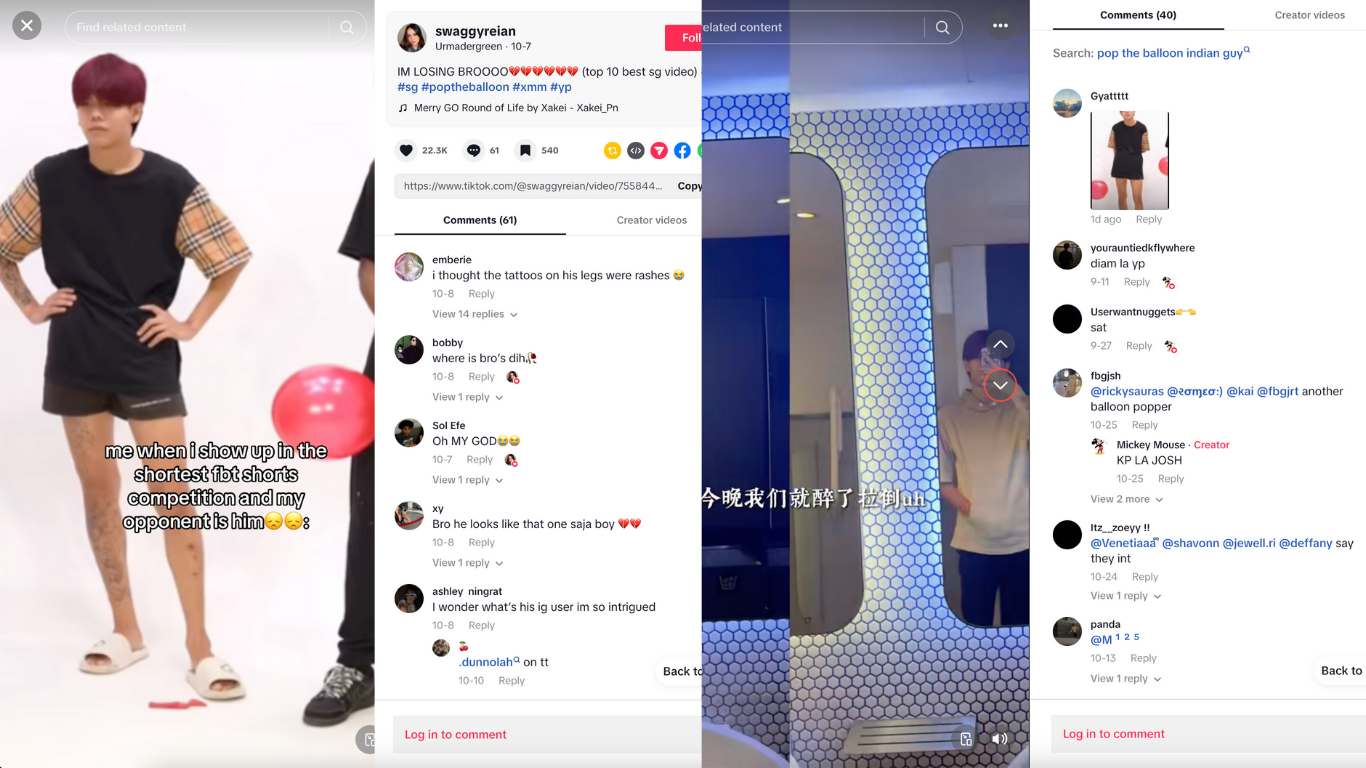
Photo Credit: TikTok/@swaggyreian, @.dunnolah
When the cameras stop rolling and the videos end, these are still real people who have to live with the image we’ve made of them. They have families, friends, interests and insecurities — not actors on our “for you page” just for our amusement.
We call it entertainment, but they have to live inside the joke. Maybe the question isn’t why we laugh, but why we forget that the people onscreen can hear our laughter.